

Key Points
- Five common causes: Most bathroom drain odors come from hair and soap scum, cracked pipes, dry P-traps, clogs, or blocked plumbing vents.
- Rotten egg smell: A rotten egg smell often signals sewer gas, which contains hydrogen sulfide produced as sewage breaks down.
- Easy fixes first: Running water through unused drains, catching hair, and flushing drains with hot water prevent many odors.
- Routine maintenance: A monthly bacteria-based treatment like BioOne helps break down the organic buildup that causes smells.
- When to call a pro: Odors that return after cleaning often point to cracked pipes, deep clogs, or vent problems that need professional tools.
A smelly bathroom drain usually comes down to one of five problems: hair and soap scum buildup, cracked pipes, a dried-out P-trap, a clog, or a blocked vent. Ever walked into your bathroom and gotten hit with a smell that makes you wrinkle your nose in distaste? You’re not the only one. Bad smells coming from your bathroom drain are more than just annoying; they show there’s a hidden battle below. But don’t worry! You have the power to beat the stench. This article uncovers the top five reasons for bathroom drain odors and how you, with some DIY and help from experienced plumbers in Jacksonville, FL, can kick these pesky invaders out for good. Jump in and take the first step toward a fresher, cleaner bathroom today.
What Causes Bathroom Drain Odors? The Top 5 Culprits
When it comes to the comforts of home, a fresh-smelling bathroom is high on the list. Yet, there’s a common unseen battle raging right below our noses. It’s the fight against the foul odors coming from bathroom drains, a problem that can turn even the most peaceful retreat into a no-go zone. As we go through this topic, it’s important to arm yourself with knowledge of the key enemies in this stinky situation.
1. Buildup of Hair and Soap Scum
Consider the regular routine of showers and shaves. It seems harmless enough until you understand the cumulative effect it has on the pipes. Strands of hair shed during shampooing get tangled together, forming a net that captures other debris. At the same time, soaps and shampoos leave a film that sticks to the pipes and traps the hair even more. Over time, this sneaky buildup thickens into a tough, smelly blockage that’s no joke to tackle on your own.
To fight this, a proactive approach is imperative. Baking soda and vinegar can help loosen light buildup as they fizz through the gunk, but for a more effective proactive solution, consistent use of BioOne works like magic. If you’re sure there’s already a large accumulation of hair stuck in a drain, you might need to use a physical tool such as a drain snake to pull out the smelly buildup. However, there are times when these DIY methods just won’t be enough, and that’s when experts with heavier tools should be called to the scene.
2. Cracked or Damaged Pipes
Moving beyond the visible, even the smallest of cracks in pipes can bring in a world of odor. These tiny splits may seem unimportant, but they are VIP passes for bacteria that eat waste, changing mere leaks into full-blown smell offenses. The bacteria’s feast on the waste materials within these cracks is the perfect recipe for that dreaded sewer scent. That rotten egg smell comes from hydrogen sulfide, which OSHA identifies as a main component of sewer gas.
This is where Harry Hayes Plumbing excels, bringing in a team of high-tech tools. Armed with video camera inspection gear that snakes through the pipes, plumbers can spot the smallest of holes, allowing for targeted repairs and professional water leak detection and repair. Catching a crack early lets expert help keep a minor annoyance from ballooning into a major crisis.
3. Dried Out P-Traps
The P-trap, an under-praised hero of plumbing, depends on a simple design: a U-bend holding water to block sewer gases from coming up. Trouble happens when these traps dry out, breaking the water seal and allowing odors to seep through. This is especially common in guest bathrooms and showers that go unused for weeks.
Thankfully, the fix is simple: pour water down the drain regularly to maintain the trap’s water seal. For more difficult cases, professionals can step in to clear any blockages or replace broken traps, reinstating the shield against incoming gases.
4. Clogged or Dirty Drains
Clogs are the enemies of free-flowing drains, plotting to create stagnant pools of water where bacteria grow and throw a stinky feast. Made up of an unpleasant mix of hair, grease, soap scum, and other waste, they lay the groundwork for odors that can take over a bathroom. The best defense includes measures like hair catchers and proper grease disposal, while regular flushing with hot water and BioOne use help wash away early biofilms.
When faced with a clog that laughs in the face of DIY attempts, call Harry Hayes Plumbing to the rescue. With an arsenal of tools from drain snakes to high-pressure water jets, our pros can clear out clogs and say goodbye to the odors they bring.
5. Improper Plumbing Vents
Vent pipes are the silent guardians ensuring that sewer gases have a safe way out of the home. When these vents are blocked by debris, leaves, or nests, or are incorrectly installed, they fail in their duty, causing gases to back up and taint the home’s air. A gurgling drain alongside the smell is a common sign of a vent problem.
The solution lies in tactical inspections and clearances of these vents. Specialists at Harry Hayes Plumbing are knowledgeable in navigating these issues, ensuring that homes breathe easy, free from offensive odors.
How to Prevent Bathroom Drain Odors With Routine Maintenance
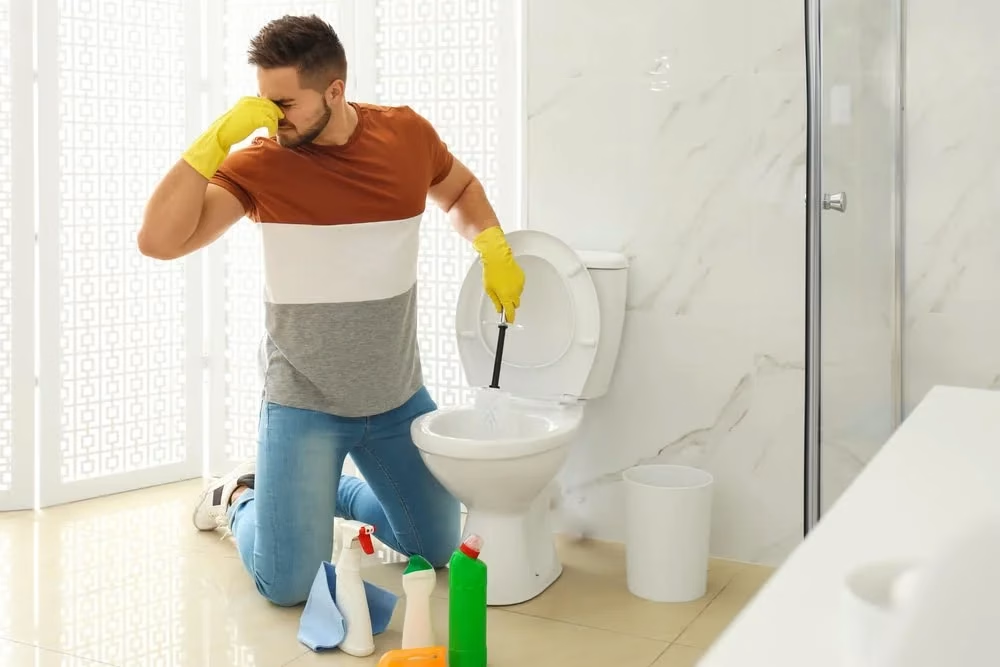
In the big picture of home care, keeping your drains in check is like playing an ongoing game of defense. The goal is clear: maintain a clean, odor-free space wherever your plumbing is involved. The best way to win this game is with a solid plan for prevention and routine maintenance.
Weekly and Monthly Drain Cleaning Routine
A steady weekly routine for your sinks and tubs is a main part of drain health. It’s much like the basic upkeep of your car; just as regular oil changes keep the engine happy, flushing your pipes with hot water can keep them running smoothly. Bacteria-based cleaners like BioOne are the next step in this maintenance routine, acting as biodegradable warriors that break down organic matter that could lead to blockages and, after that, odors. Here’s a checklist to keep by the sink:
- After every use: Clear visible hair from the drain.
- Once a week: Flush drains with hot water to clear away any starting buildup.
- Once a month: Add a bacteria-based cleaner like BioOne to your routine for a deeper clean that’s kind to your pipes.
- In unused bathrooms: Run water down sinks, tubs, and showers every week or two so the P-traps don’t dry out.
These simple steps are easy to mix into your daily life and can greatly reduce the chance of plumbing problems.
Professional Drain Inspection and Cleaning
Even with the strictest home maintenance schedule, some issues are best left to the pros. That’s where Harry Hayes Plumbing steps in, equipped with the latest technology and a wealth of experience. Routine inspections are a bit like medical checkups for your home’s plumbing system; they use high-tech video cameras to peek inside the pipes, finding any potential problems waiting in the wings.
With an arsenal of tools like high-powered augers and water jets, our plumbing experts can provide professional drain cleaning that goes beyond the surface, ensuring your pipes aren’t just unclogged but rejuvenated. Scheduling an annual or biannual drain evaluation helps catch buildup, cracks, and venting issues before they turn into emergency calls or lingering odors. This isn’t just a temporary fix; it’s about playing the long game and investing in the health of your plumbing system for a future free from the headaches of emergency repairs.
Frequently Asked Questions
Why does my bathroom drain smell like rotten eggs?
A bathroom drain that smells like rotten eggs is usually letting sewer gas into the room. Sewer gas contains hydrogen sulfide, which forms as bacteria break down waste in the drain lines. The most common causes are a dried-out P-trap, a cracked drain pipe, or a blocked plumbing vent.
Why does my shower drain smell when the sink doesn’t?
A shower drain often smells first because it collects the most hair and soap scum, which feed odor-causing bacteria. A shower that isn’t used often can also have a dry P-trap. If running water and cleaning the drain don’t fix the smell, the shower line may have a deeper clog.
Can I pour bleach or chemical drain cleaner down a smelly drain?
Harsh chemical drain cleaners may mask the smell for a short time, but they can damage pipes with repeated use and don’t prevent new buildup. A bacteria-based treatment like BioOne breaks down the organic material causing the odor and is safe for pipes and septic systems.
When should I call a plumber about a smelly bathroom drain?
Call a plumber if the odor keeps coming back after cleaning, if more than one drain smells, or if you hear gurgling or notice slow drainage. These signs often point to a cracked pipe, deep clog, or vent problem. For a sewage backup or an overpowering sewer smell, contact an emergency plumber right away.
How often should bathroom drains be professionally cleaned?
Most homes benefit from a professional drain inspection and cleaning once a year. Homes with older pipes, heavy bathroom use, or recurring clogs may need service every six months to keep odors and blockages under control.
How to Keep Bathroom Drain Odors Away for Good
You’re now aware of what causes bathroom drain smells and have a plan of attack. Don’t let hair and soap scum gang up on you; hit first with baking soda, vinegar, and hot water. If your pipes have cracks, remember, we’re ready with high-tech solutions to seal the deal before smells get worse. Keep P-traps full of water and say no to unwanted sewer gas concerts in your bathroom. Clogs? Show them who’s boss with a good flush and a hair catcher. And if your plumbing vents misbehave, you know who to call to make it right.
Welcome a weekly hot water flush and a monthly BioOne treatment to keep those pipes clean. But remember, some fights need a pro’s touch. With regular check-ups and expert cleaning, you’ll keep those plumbing pests away. Trust Harry Hayes Plumbing for that deeper, preventive maintenance, ensuring peace of mind and a fresh-smelling home. Ready to win the fight against smells? Give us a call at 904-621-4373 or contact our team today, and let’s keep your home smelling sweet.